After picking me up from one of my childhood guitar lessons, my dad recalled a memory from his own guitar journey. After his first lesson, his guitar teacher told him to go home and grind his fingertips on sandpaper to develop calluses. He quit music altogether soon after. Fortunately, he learned from this, and chose to break the cycle of abuse—and colossally bad advice—when it came to me.
Good guitar technique varies from person to person; we all have different physiological strengths and weaknesses. There is no one-size-fits-all solution. However, there are universal guidelines that will help you prevent injury and play guitar with more ease.
Understand the Anatomy of Your Hand
The first key to good guitar technique is understanding how your hand works. Fingers do not contain muscles themselves. The muscles that are responsible for moving your fingers are contained in your hand and forearm. These muscles pull on tendons to puppet your fingers.
For effective guitar playing, you want to provide these tendons a smooth channel to move through. Any severe wrist angles in either direction can obstruct this motion.
For example, hold your hand straight and wiggle your fingers, then bend your wrist at a 90 degree angle and repeat. It is much easier to do with a straight wrist.
Try this: Sit with good posture with your guitar. Relax your left arm and let it hang toward the floor.* Bend your arm at the elbow and rotate your hand toward the guitar. Keeping a straight wrist, wrap your fingers around the front of the fretboard, and place your thumb against the back of the neck directly behind your fingers.
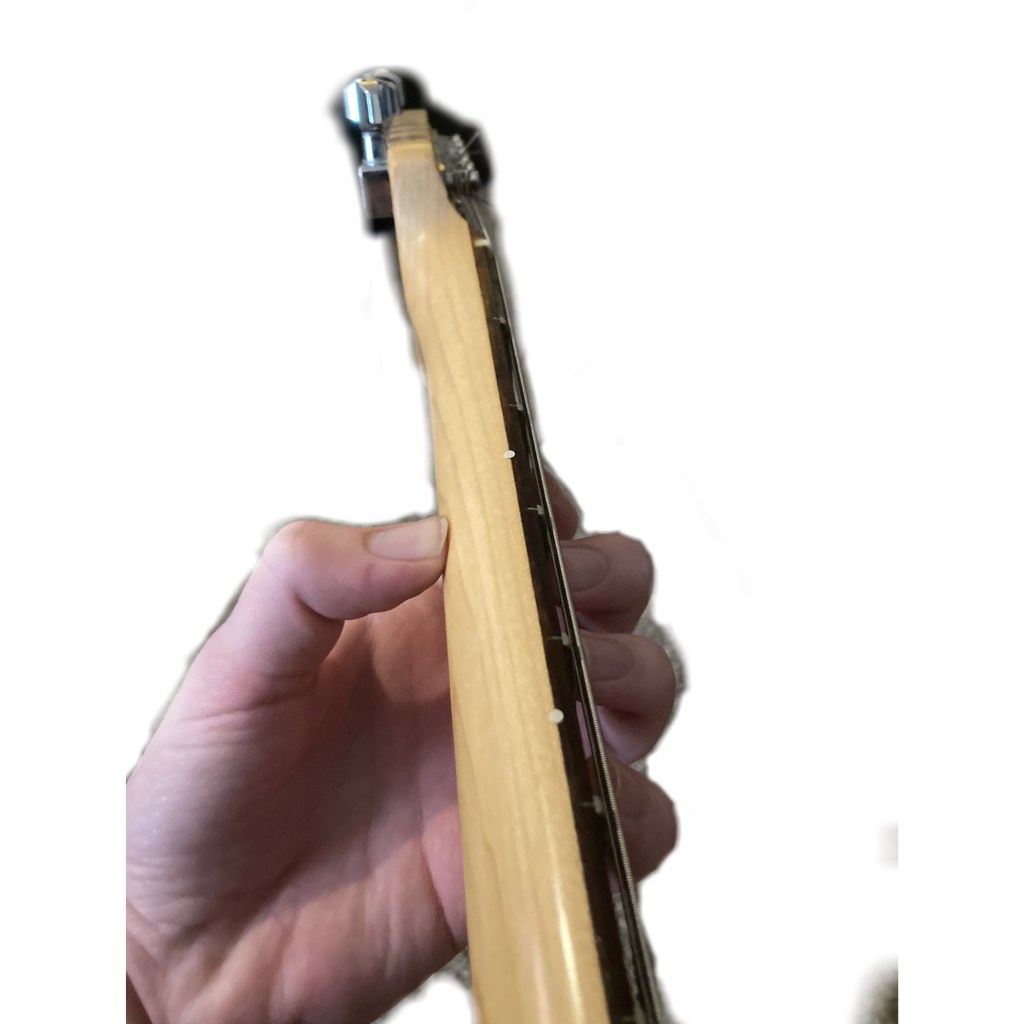
I see a lot of beginner guitar players place their palm against the back of the neck of the guitar while playing chords. Instead, try keeping a straighter wrist and using your thumb in conjunction with your fingers to pinch through the guitar. This grip is more inline with how humans evolved to hold and grip things. You may need to bend your wrist a bit to reach some more difficult chords, but avoid severe angles.
Curve Your Fingers
Arches have been used since ancient Egypt in architecture and engineering for their strength and stability. You even have an arch in the bottom of your foot supporting the weight of your body.
As a guitar player, you can utilize the power of arches by simply curving your fingers while playing notes with your fretting hand. This not only increases power and accuracy, but also, curved fingers are crucial when playing chords. Curved fingers allow you to play multiple notes at the same time without the strings being muted.
You may be thinking: “What about Barre Chords?”
Don’t.
The Sweet Spot
Bill Gates is famously quoted as saying: “I choose a lazy person to do a hard job. Because a lazy person will find an easy way to do it.”
One of the big secrets to getting good at guitar is … be lazy.
You do not want to use any more than the minimum pressure to play a note.
In guitar, accuracy is more important than strength. To play notes most effectively, you want to aim your fretting fingers directly behind the fret you’re playing.
This is the Goldilocks zone of the fret. If your finger is directly on top of the fret, the flesh of your finger will mute the string. If your finger is in the middle of the fret, the string will buzz and the amount of pressure needed to hold the note increases drastically.
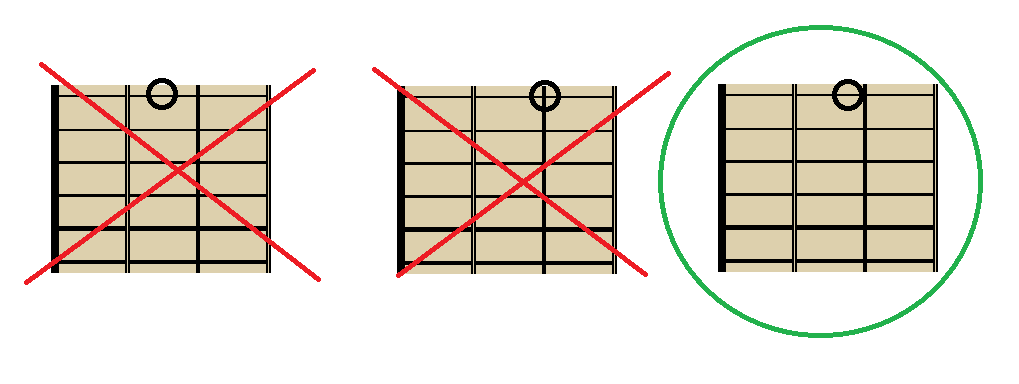
Take the time in the beginning of your learning process to work on aiming each finger at its fret’s sweet spot. Throughout your guitar-playing journey you will likely play millions of notes. Why not make every one of them a bit easier?
Human hands evolved to climb trees and wield sticks, not to play beautiful music. Go easy on yourself.
Playing the guitar requires a good amount of work on the front end just to produce clear strong notes. (You can face-plant onto a piano and it will still sound good, as long as you land on the black keys.) New things are always challenging, but keep these tips in mind. Once you get over the initial hurdle, it’s off to the races.
 Four Lights Music Production